News & InsightsFeaturedPractical
2026年3月25日
Formaldehyde-Free Keratin Treatment: How to Choose a Product That Actually Works (and Sells)
Formaldehyde-Free Keratin Treatment: How to Choose a Product That Actually Works (and Sells) If you are currently looking into keratin products, chances are this isn't your first time. What you’re
Formaldehyde-Free Keratin Treatment: How to Choose a Product That Actually Works (and Sells)

If you are currently looking into keratin products, chances are this isn't your first time.
What you’re really concerned about isn't:
👉 What’s listed in the ingredients
👉 How attractive the packaging looks
Rather, it comes down to these more practical matters:
- Will customers complain?
- Will salons be willing to continue using it?
- Is this a product that can be sold successfully over the long term?
So, the core issue isn't simply whether the product is "good" or "bad," but rather:
👉 Is this product going to cause problems?
Why Are More and More Buyers Insisting on "Formaldehyde-Free"?
The market has changed. This isn't just a trend—it's the new reality.
In the Past:
👉 As long as it works, that's enough.
Now:
👉 It must work—and cause no problems.
The reality of the situation is this:
~The hairstylist complains about the strong fumes.
~The client tears up during the service.
~The salon faces significant challenges regarding ventilation.
None of these issues will be mentioned in online reviews, yet they directly impact:
👉 Repeat business + Referrals + Whether we continue our partnership.
But here’s the catch: For many products, the "formaldehyde-free" label is merely for show.
This point is crucial.
Not every product labeled "formaldehyde-free" is truly fit for commercial sale.
You can use a very simple method to assess this:
✔ During application, do you experience any discomfort on-site?
If:
Strong ventilation is required;
There is a sensation of irritation;
Or the client feels uncomfortable;
👉 Then, from a commercial standpoint, this product carries a significant risk.
The second core question: If it’s safe, will it be ineffective?
This is a question every buyer asks, yet few people ever fully clarify it:
👉 “Safety ≠ Ineffectiveness”
👉 But a low-spec formula = Ineffectiveness
Products that are truly capable of succeeding in the market today share two common characteristics.


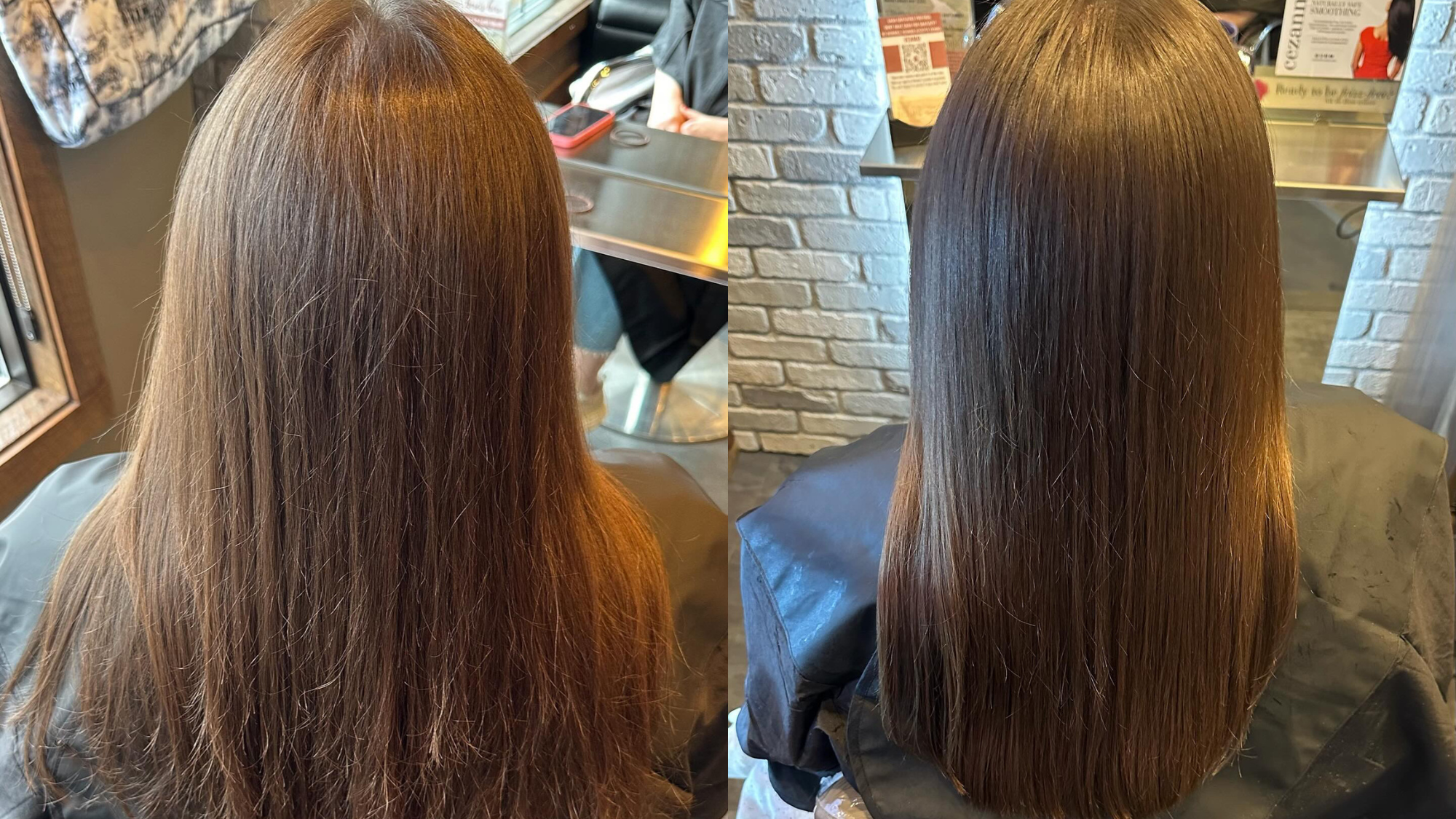
✔ First: It visibly controls frizz (something the customer can see at a glance).
~Smooth
~Tamed (No "poofiness")
~Easy to manage
👉 This is the reason you make that "first sale."
✔ Second: It possesses restorative logic (will customers come back?)
~Improvement in damage caused by coloring and perming
~Reduced dryness
~Improved texture
👉 This is the key to whether you can "sustain sales over time."
Why More and More Buyers Are Opting for a "System" Rather Than Standalone Products
Many people tend to overlook this point at first.
The issue lies not with the product itself, but with the inconsistency of the results.
👉 Issues with Individual Products:
~Significant variation in results across different hair types
~Inconsistent customer experience
~Difficult to position for high-priced services
👉 System Advantages (Key Highlights):
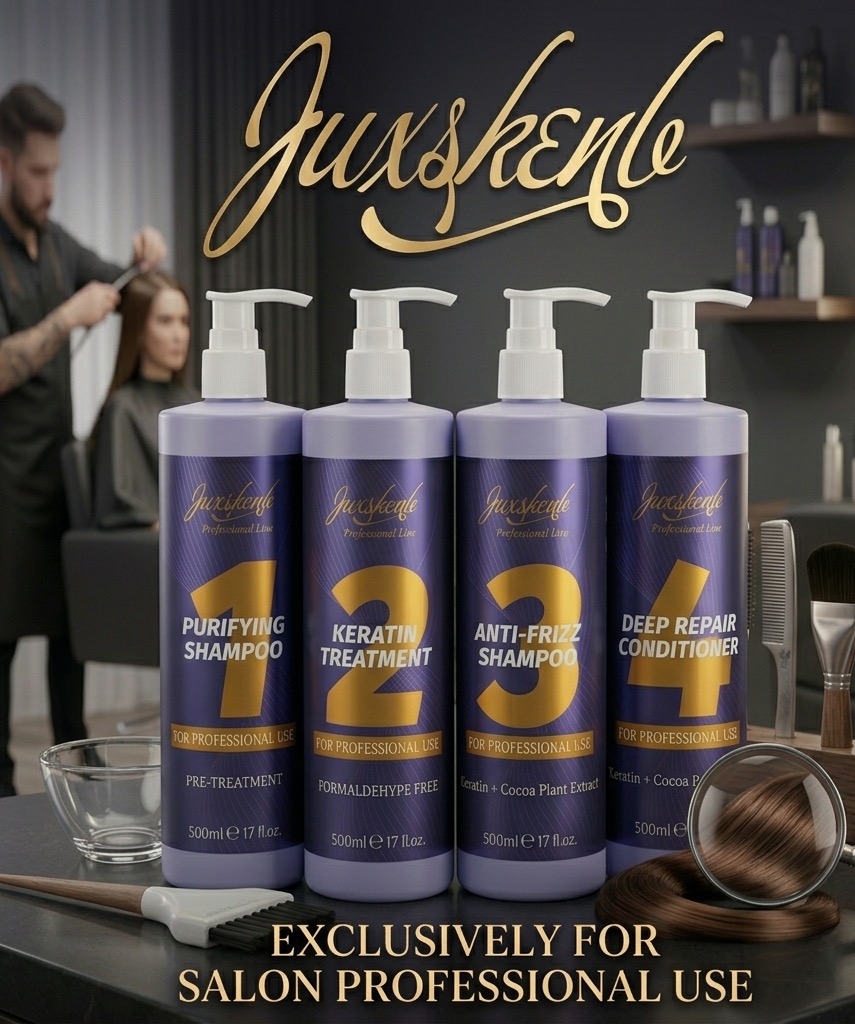
The 4-Step Logic Is Actually Quite Simple:
- First, Cleanse Thoroughly
- Next, Treat the Issue
- Then, Maintain Stability
- Finally, Repair and Restore
What does this mean for you?
If you are:
✔ A Distributor:
👉 You can sell "projects" (comprehensive solutions), rather than just individual bottles.
✔ A Salon:
👉 You can offer high-ticket services.
✔ A Brand:
👉 You generate repeat business (rather than just one-off sales).
Why the Central Asian Market Is Particularly Well-Suited for This Type of Product
I highly recommend that you emphasize this specific point to your clients (differentiation).
Because the environment dictates the demand:
~Dry Climate → Severe Frizz
~Cold Climate → Increased Hair Brittleness
~High Reliance on Salon Services
Therefore, customers aren't merely looking for hair care products; what they are truly seeking is:
👉 "A solution that resolves the problem of frizz."
Once you reach the negotiation stage, what clients are really asking about boils down to just three things.
By the very end, the conversation is no longer about abstract concepts; it essentially comes down to this:
1️⃣ Can the MOQ be lower?
👉 Because they need to test the market.
2️⃣ Can you guarantee a stable supply?
👉 Because they are afraid of running out of stock.
3️⃣ Are the documents complete?
👉 Because of customs clearance / compliance requirements.
Here is a simple criterion for evaluation:
You can use these three questions to quickly screen potential suppliers:
✔ Is it comfortable to use?
✔ Does it produce noticeable results?
✔ Will customers come back?
If all three conditions are met, then—and only then—is the product worth pursuing.
If you're currently comparing keratin suppliers,
don’t just look at pricing or claims like “formaldehyde-free.”
What actually matters is:
- real salon experience
- repeat purchase potential
- and how easy it is to sell in your market
If you want, we can share what has worked (and what usually fails) in dry-climate markets like Central Asia — including sample testing and low MOQ options.